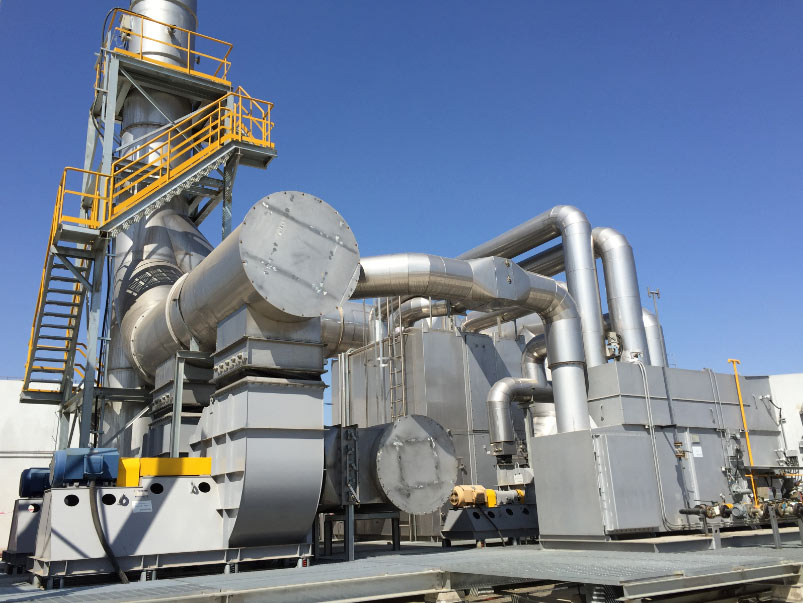

VOC treatment system selection, from first inquiry to workable process route
Most VOC treatment inquiries do not start with a perfect data sheet. A buyer may only know the workshop process, the approximate exhaust volume, or the smell problem at the outlet. That is normal. Before recommending an RTO, catalytic oxidizer, thermal oxidizer, activated carbon system, scrubber or combined process, we first look at the gas source, operating hours, VOC concentration, humidity, dust or mist content, and the emission target.
This page is written for project owners, EPC teams and overseas buyers who need a practical VOC control system rather than a catalogue list of equipment names.
When an RTO is a good choice, and when it may not be
An RTO is often considered when the exhaust volume is large and the VOC concentration is stable enough to benefit from heat recovery. It can be a strong option for coating, printing, chemical, pharmaceutical and other continuous exhaust streams.
But an RTO is not automatically the best answer for every workshop. If the gas volume is small, the concentration is very low, or the process runs only a few hours per day, catalytic oxidation, adsorption, a scrubber plus polishing stage, or another simpler route may be more reasonable. The operating cost matters as much as the purchase price.
Typical VOC applications we review
- Painting and coating VOC treatment, especially where paint mist or solvent peaks may affect the main unit
- Printing and packaging VOC abatement, where stable airflow and solvent composition are important for sizing
- Chemical and pharmaceutical exhaust gas treatment, often requiring pretreatment or safety review before oxidation
- Oil and gas vapor recovery or vapor destruction projects, where recovery value and explosion-proof requirements must be checked
- Wastewater tanks, sludge rooms and pump stations where VOCs and odor appear together
Pretreatment is often the part that decides whether the system runs well
For many VOC projects, the main equipment is not the only decision. If the exhaust contains dust, oil mist, resin, tar, acid gas or high moisture, pretreatment should be discussed first. Otherwise filters block quickly, catalyst life becomes shorter, or the system may not reach the expected removal efficiency in daily operation.
This is why we usually ask for process photos, duct layout, gas composition and operating rhythm before quoting. A good VOC treatment system should match the actual workshop, not only the keyword on the inquiry.
What we need for a useful quotation
For preliminary sizing, please send exhaust air volume, VOC components, concentration range, temperature, humidity, working hours, dust or mist condition, safety requirements and local emission target. If you do not have full test data yet, send what you have. We can start with an engineering discussion and then list the missing data.
FAQ
Can you quote if we only know airflow but not VOC concentration?
Yes, but the quotation can only be preliminary. Airflow helps size ducts, fans and the equipment body, while VOC concentration affects process choice, heat balance, safety and operating cost. We will usually mark the assumptions clearly.
When is an RTO too expensive for a small workshop?
If the process runs intermittently, the VOC concentration is low, or fuel cost would be high, an RTO may not be the most economical choice. In that case we may compare adsorption, catalytic oxidation or a smaller combined process.
Do you help review duct layout before production?
Yes. Duct layout, source capture and pressure loss affect the final result. We can review drawings or simple site sketches before confirming equipment size.